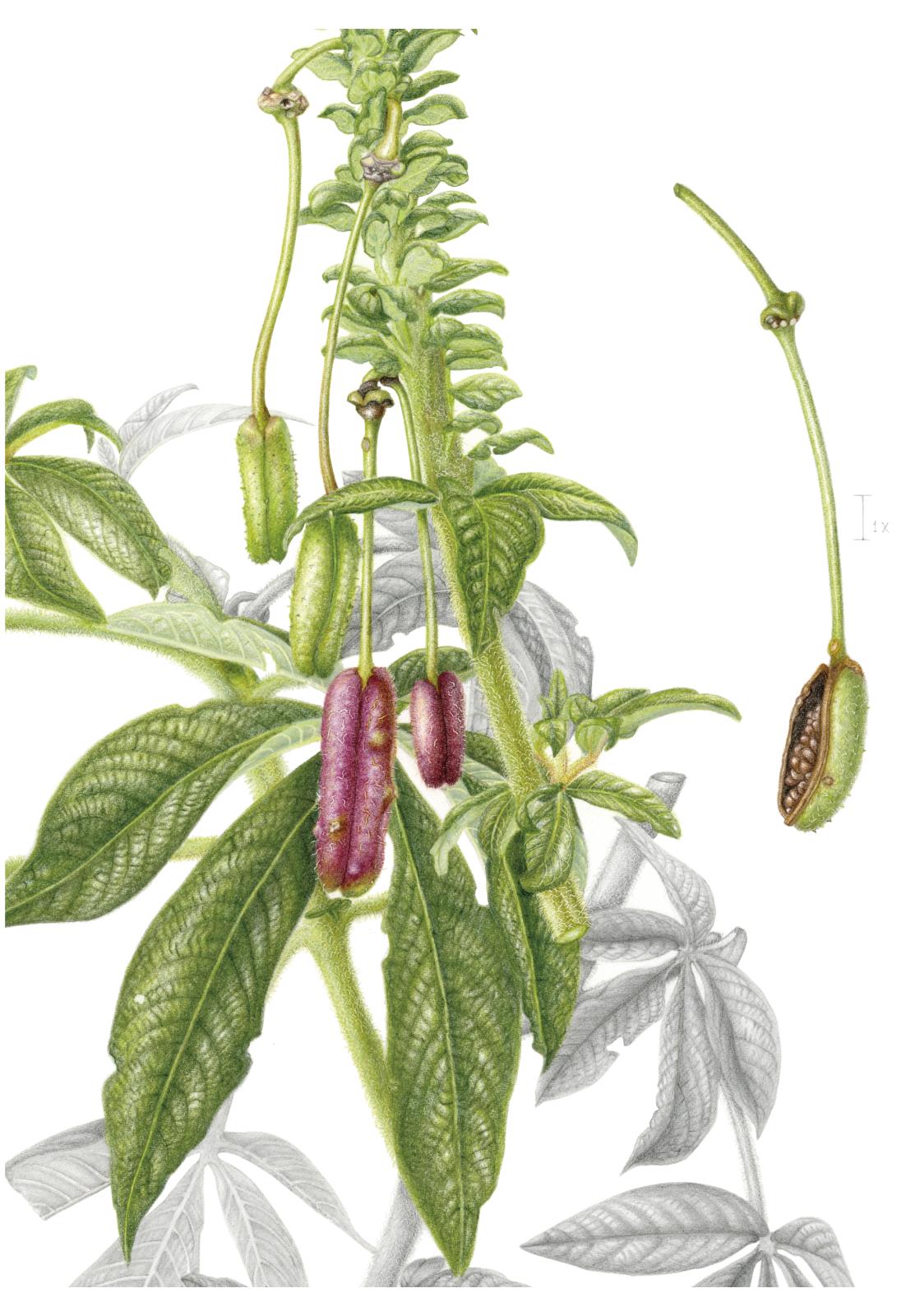
by Jenny Ordoñez
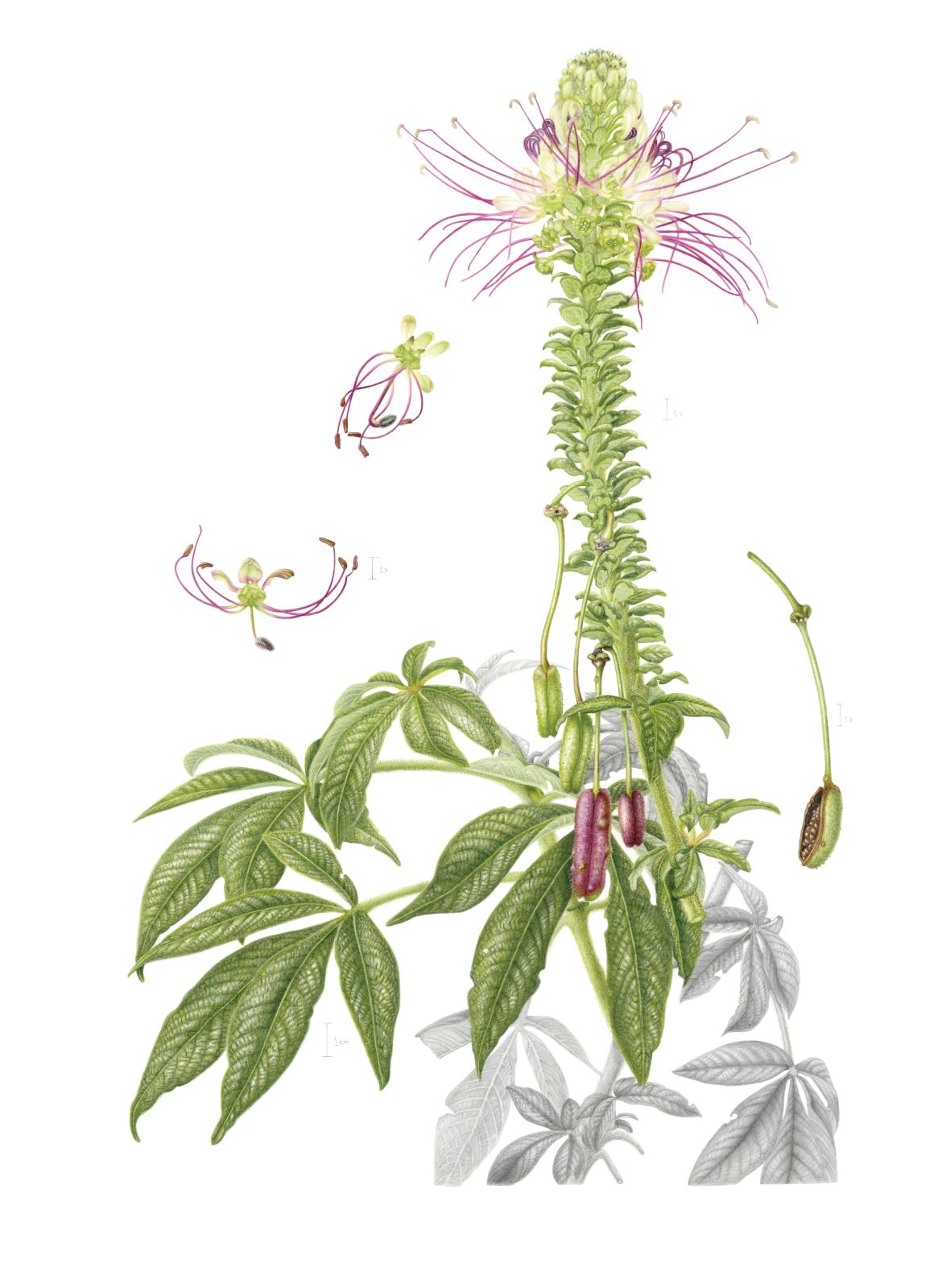
Cotton paper, colour pencils and graphite
h: 61 w: 45 d: 1 (cms).
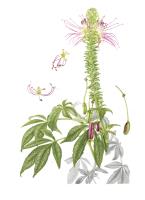
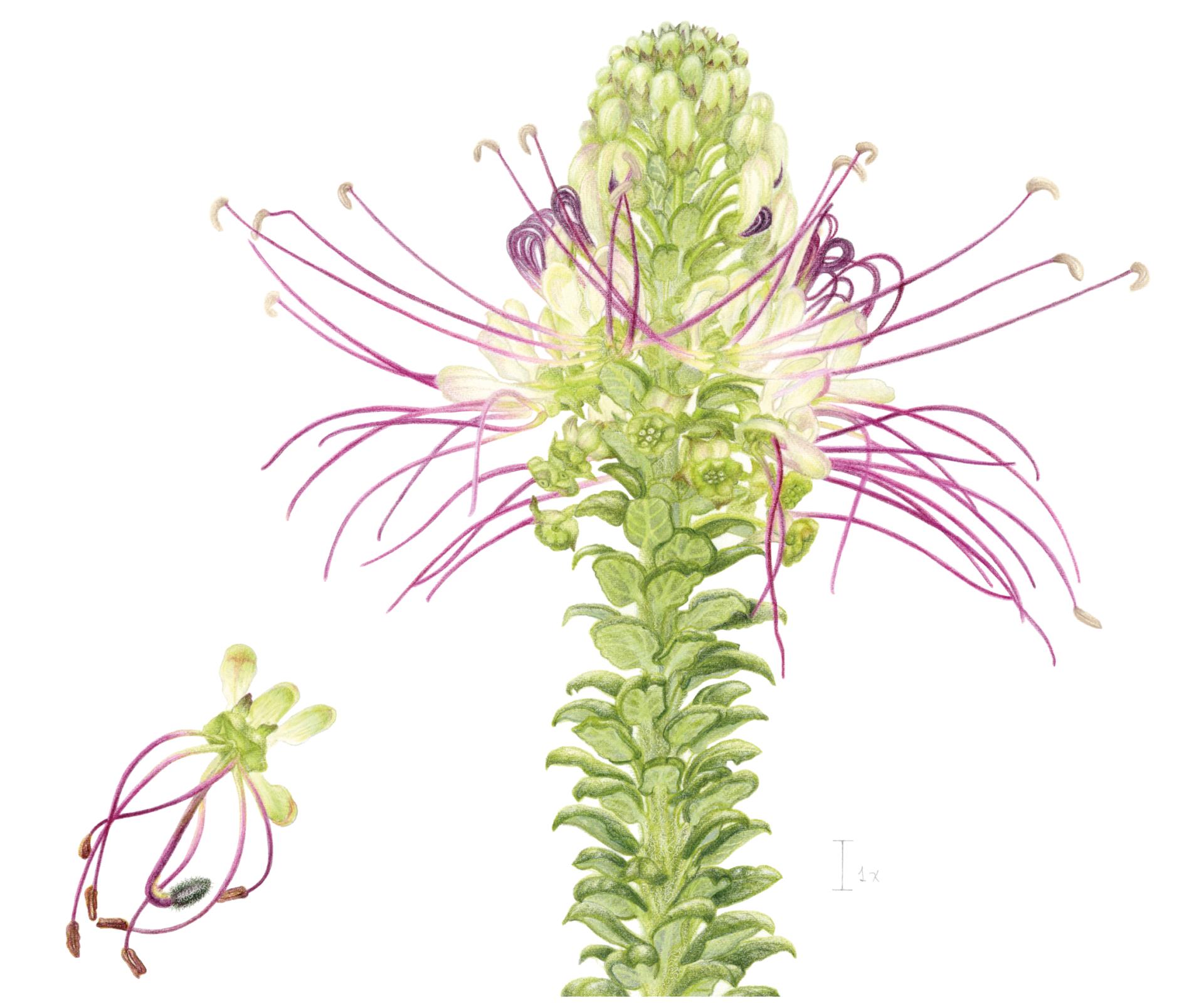
Commissioned by the Universidad Católica de Cuenca, this work contributes to the re-edition of the 1911 classic, Enumeración Botánica de Luis Cordero. While the original publication holds immense historical weight, this new edition marks a milestone in Ecuadorian science and art: integrating modern botanical revisions and, for the first time, featuring the work of Ecuadorian botanical illustrators. Among the plants featured in this edition is Cleome anomala, an herbaceous shrub reaching heights of 3 to 4 meters. Found within the moist montane forests of Ecuador—often tucked away in ravines or forest gaps—it is a modest plant that easily blends into the verdant vegetation. However, it reveals its splendour through its striking inflorescences, characterized by long, vibrant purple anthers that gracefully protrude, demanding the viewer’s attention. The specimen from the illustration was observed within the Pasochoa forest reserve, near Quito, Ecuador.
£1000 (As exhibited.)
Please Note: If you are overseas and interested in a purchase there will be additional costs for postage and packaging added to this price. Feel free to enquire about this using the button below. If no price is shown, the work is not for sale.
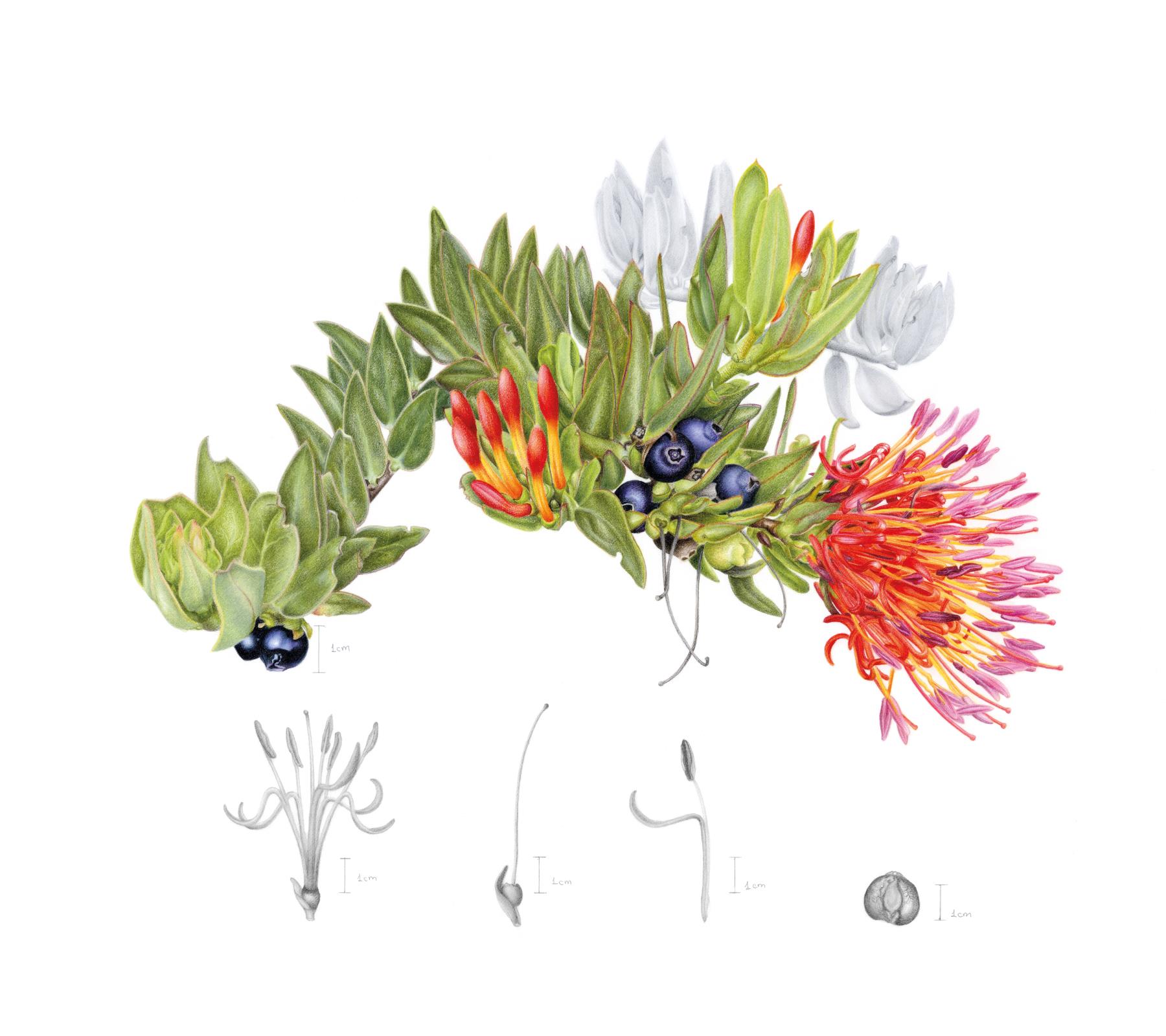
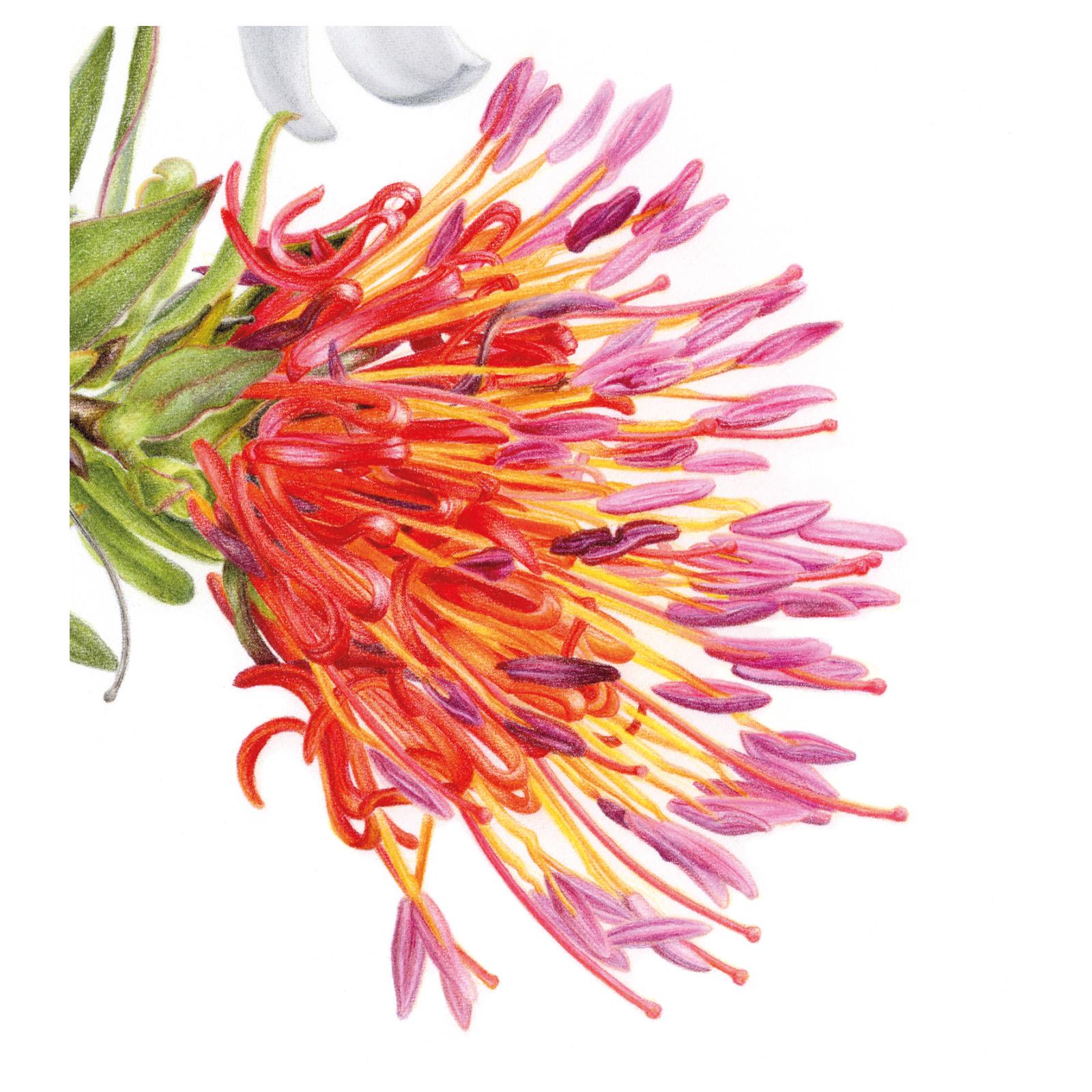
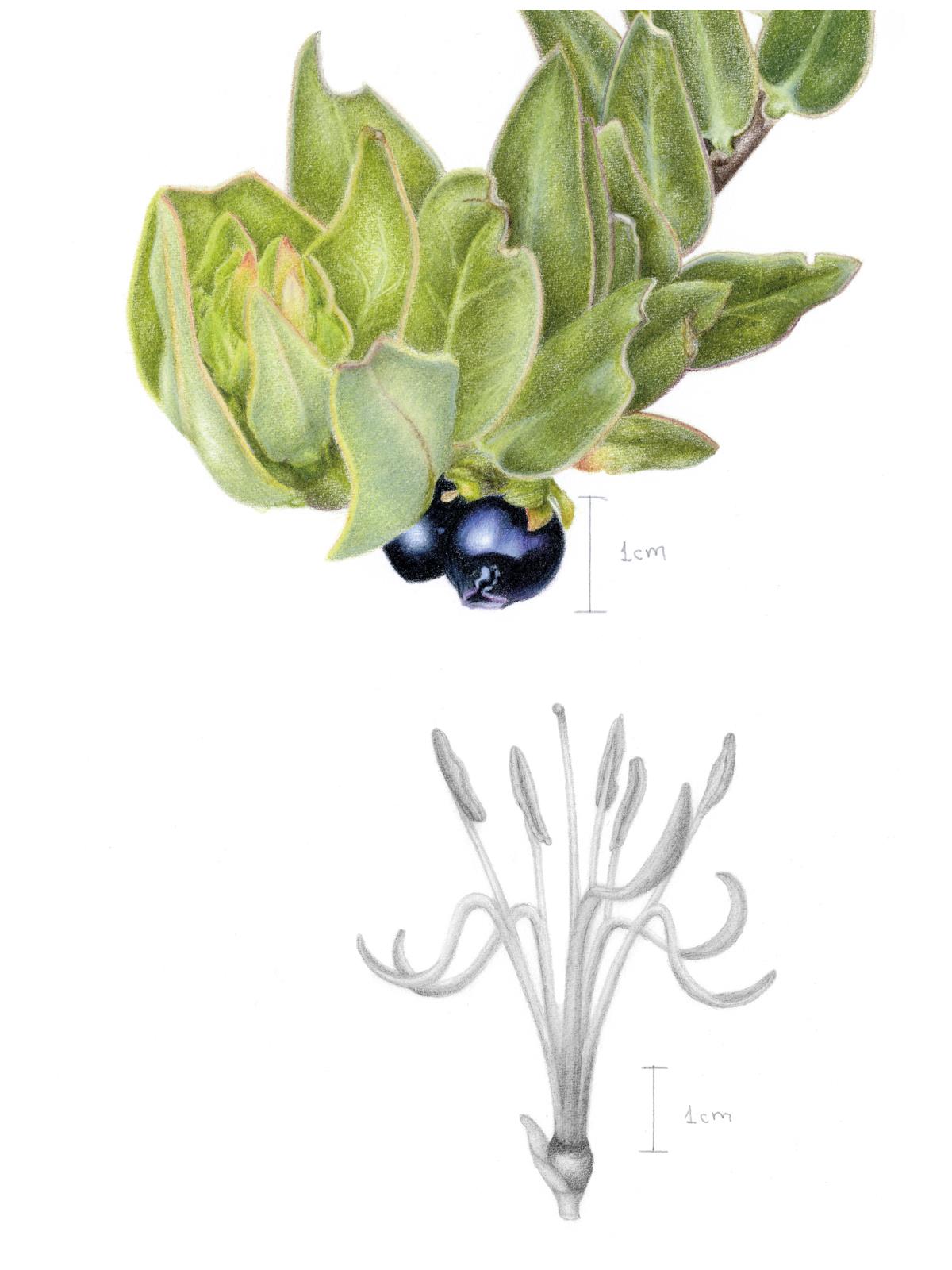
by Jenny Ordoñez
Cotton paper, colour pencils and graphite
h: 40 w: 45 d: 1 (cms).
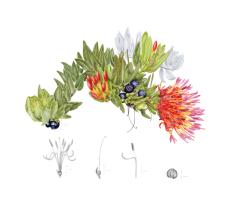
A member of the Loranthaceae family and a relative of the common mistletoe, this hemiparasitic plant belongs to the genus Tristerix—a group endemic to the Andes, stretching from Colombia to Argentina. This resilient species thrives at elevations up to 4,000 meters above sea level, anchoring itself to the shrubs and small trees of the high-altitude paramos. Known locally as “mingari” or “fosforitos” ("little matches"), the plant is integrated into local tradition for its medicinal properties. Its ecological role is equally vital: its vibrant flowers are a nectar source for high-altitude hummingbirds, while its fruits sustain various bird species that, in turn, serve as the primary agents for seed dispersal. The specimen from the illustration was observed in the surroundings of Mojanda lake, Imbabura, Ecuador.
£800 (As exhibited.)
Please Note: If you are overseas and interested in a purchase there will be additional costs for postage and packaging added to this price. Feel free to enquire about this using the button below. If no price is shown, the work is not for sale.